
THE LONG TAKE - Issue No. 1
Issue No. 1 • ORDINARY RITUALS
A NOTE BEFORE WE BEGIN
I forget plots all the time. It’s terrible. Don’t ask me what happened in a film I watched three years ago. There’s a good chance I’ll get half of it wrong.
But what I can do is picturing someone making a coffee before sunrise. I can picture someone standing outside a restaurant with a cigarette after dinner. Someone walking home. I can’t remember for sure why they were there. I just remember that they were.
For a long time, honestly, I thought I was remembering the wrong things. Weren’t the important scenes supposed to be arguments, the kisses, the endings?
Apparently not.
I sometimes wonder if we’ve been taught to look for the wrong moments… When I think about the people I love, my mind rarely goes to the important moments. Birthdays. Weddings. Breakups. Big Decisions. THE conversation that changes everything.
Funny how memory works, because I clearly remember stuff like a girlfriend waiting for the kettle to boil. A walk to her car during winter time. The way she always sat on a chair.
What I like about cinema is that it seems to also understand that instinct, and better than we do. Some films really spend as much care on a person pouring a coffee as another might spend on a dramatic speech.
This issue is my attempt to understand why those moments of life matter so much, both on screen and in our own little lives.
I hope that by the ‘last scroll page’ you’ll find your own answer too.
INSIDE THE FEELING
I love films where almost nothing happens. Yep. I said it.
I really can relax into their rhythm. I’m not waiting impatiently for a turning point. I’m enjoying the simple passing of time.
Someone goes to work and comes home again.
The same street, the same gestures, but with some small variations. The day passing becomes enough for me. It’s enough to hold my attention. I can also appreciate when a conversation carries on without really leading anywhere. An afternoon that slips by with nothing in particular happening. You spend longer with a routine than you expected to.
And by the end of the film, it feels like you’ve spent a few days with these people. You get used to them. Their routines. The way they talk. Then the film ends, and they’re gone. There's a small sense of absence.
Paterson might be the purest version of this feeling.
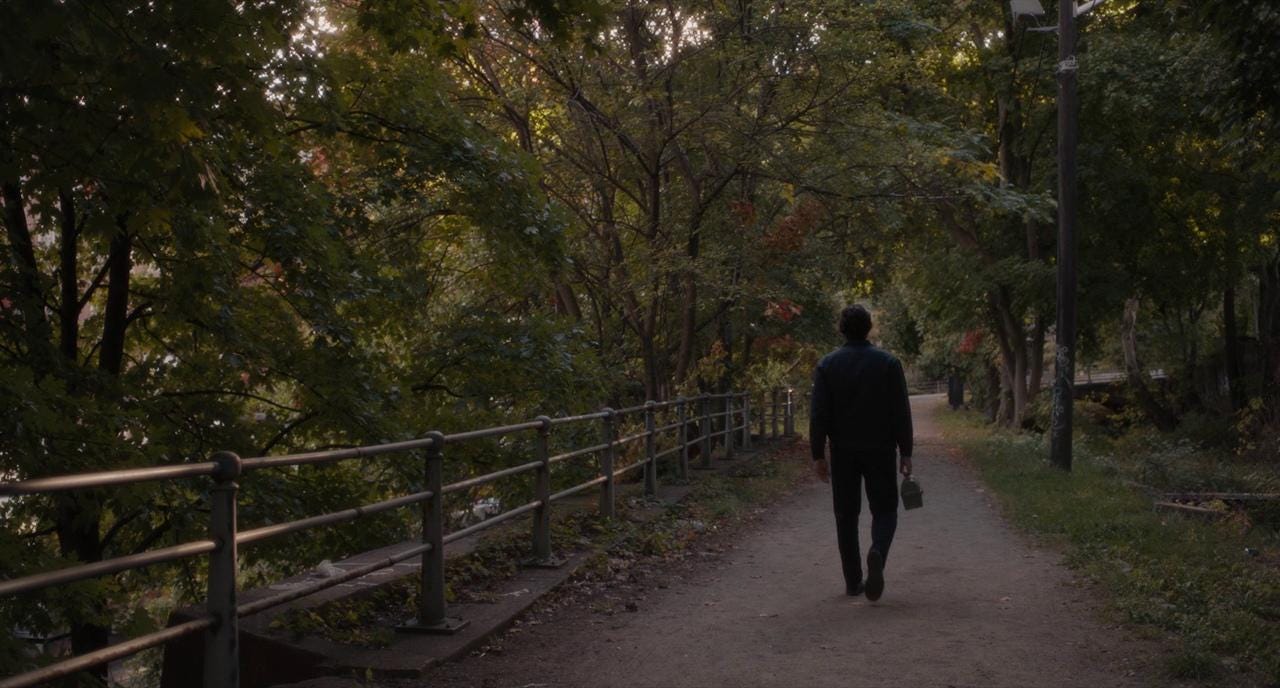
It follows a bus driver through a week that barely changes.
Same wake up. Same walk. Same route. You get it. Pure routine.
The conversations don’t exist to push the story forward. You’ll hear two passengers talk about twins, or someone mentioning a small detail about their day, or also a brief exchange a the bar.
Nothing changes in the film because of it, and after some time you stop listening for clues about where the story is going. You start listening differently to people’s voices, to the pauses, to the rhythm of a day. And the film keeps going back to the same places like the bus route, to Laura’s latest project, to the neighbourhood bar.
At some point they become familiar places to us because we’ve spent time there. The notebook becomes precious because you’ve watched someone open it every morning.
You get used to it being there.
—
Adam Drivers plays Paterson like a man who’s made peace with the idea that most of life happens in the margins. There’s humility to his performance that’s radical, and a softness you rarely witness given his presence. Driver has this way of letting emotions comes through him like weather: a bit of amusement here, a delayed heartbreak there, all in subtlety, and all anchored in steady monk-like calm.
Goldshifteh Farahani is the film’s heartbeat. She plays Laura with such open, effervescent sincerity that it never tips into quirkiness. Her optimism could have easily felt manic in another actor’s hand, but Farahani grounds it in genuine warmth.
I like how Laura makes creativity look like a spiritual practice. Every curtain she paints or cupcake she decorates is her way of keeping the world bright. What I also appreciate, and that’s beautiful really, it’s that she never overshadows Driver. If anything, her presence gives him something to respond to, like a slow burning flame meeting its own source of oxygen.
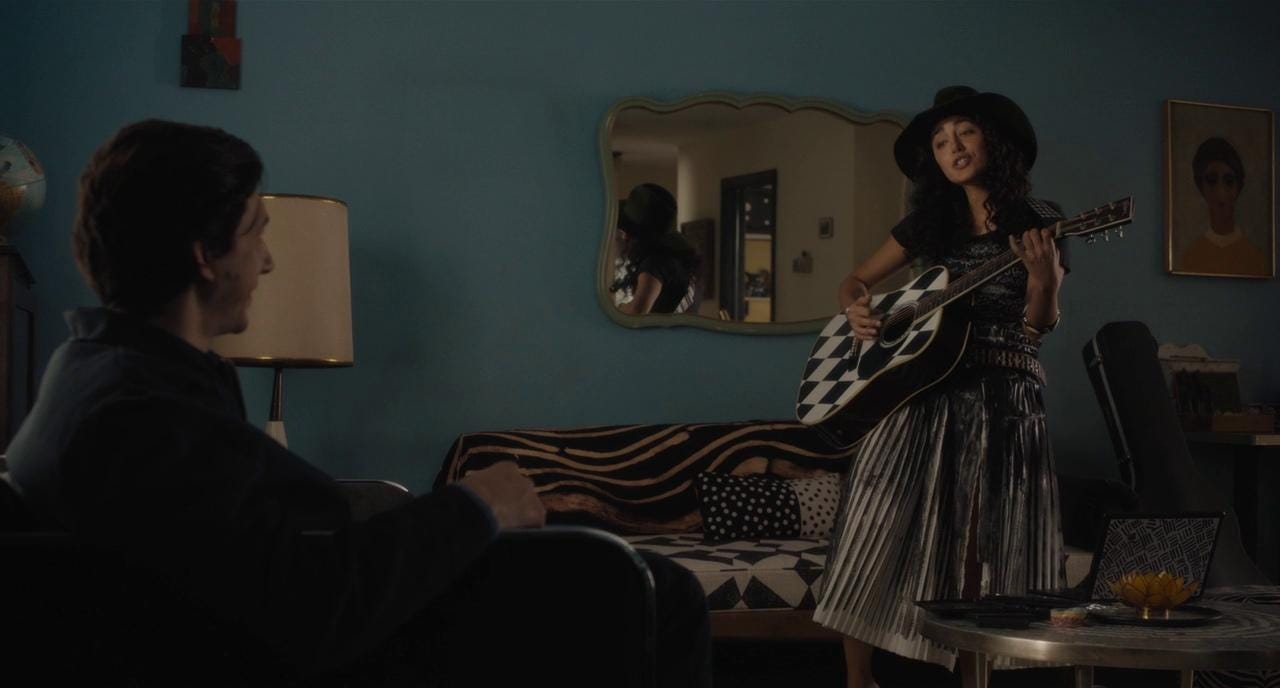
Together they create one of cinema’s most convincing relationships. Two people sharing a life built from small rituals and small joys.
—
In Perfect Days, the same things happen again and again.
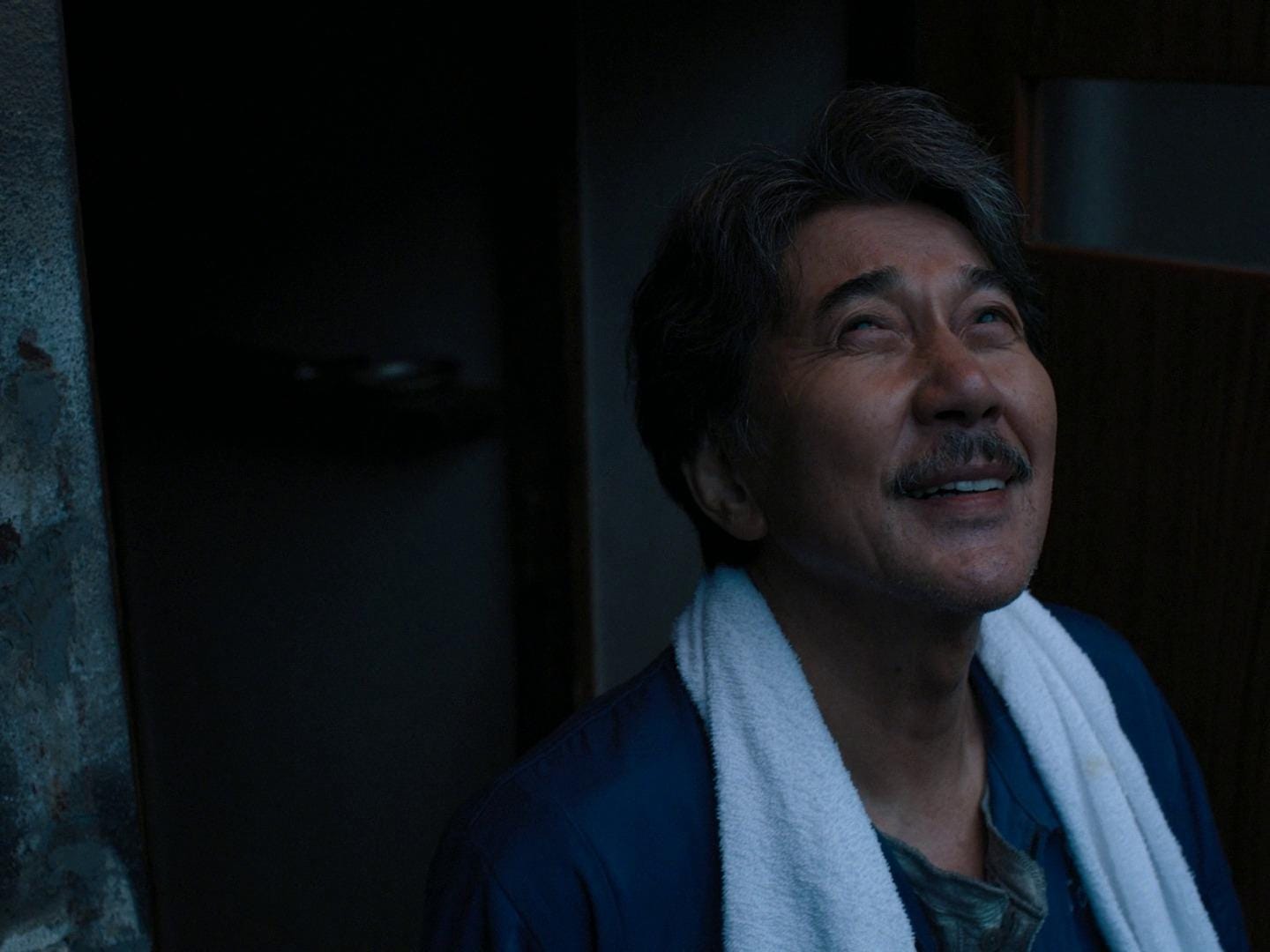
Everything moves at its own pace with no need to reach beyond itself. Once again we have a simple routine: a man wakes up, folds his bedding, waters his plants, goes to work, listens to music, eats reads, sleep. The pattern repeats throughout the film with small variations.
As often in these kinds of films, you’ll gradually notice how much attention the character gives to small things, and then the repetition will stop feeling minimal and will start to feel rich. The same lunch spot will now carries familiarity. The same streets will now begin to feel like home.
Wim Wenders romanticises everyday life through simple presence. He romanticises it by showing how someone can deeply inhabit it. Each gestures are chosen, or at least, they feel chosen. It doesnt feel automatic. He’s shaping his days through attention.
Let’s talk about Kōji Yakusho! He plays his character with no explanation, he barely speaks and yet you feel a full interior life. He gives us small smiles, or a look held a second longer. The way he listens to music … Everything is contained but never empty.
—
Both of these films let time pass. They stay with repetition, small gestures, familiar places, and after some time you stop waiting for something else. The routine itself is enough, and that’s what they leave you with: the sense that everyday life does not need to be elevated in order to feel meaningful.
When I finish these films, the next days are slightly different. A walk feels longer, a conversations lingers a bit more. Small things matter a bit more. I love Patterson, and Perfect Days because yes, they romanticise everyday life but they also taught me how to see it.
I hope you’ll watch them and spend a little time with these lives and maybe enjoy them as much as i did.
The Invisible Language
I have always found it strange that some of the moments I remember most from movies are the ones where almost nothing happens.
Like someone making coffee in the morning before starting the day, or someone smoking outside a restaurant after a dinner. Someone walking home after nothing particularly important has happened.
They seem like the kind of scenes we should forget. No big revel’ no drama, no moment where someone’s life change direction, and yet, years later, these are often the images that return: a person looking out of a window, a conversation that never reaches a conclusion. Someone sitting alone after another person has left.
Most people often remember films because of the moments when everything changes, the big climax: the argument, the goodbyes but often, what we remember is a bit smaller. We will remember a person’s expression, gestures between two people, a few minutes of a life that only existed once.
—
Movies cant show someone’s regrets, fears, or loneliness. Instead, they show us the room they live in. They show us the objects they touch, the things they do everything morning without thinking.
A morning routine can reveal more about a character than a speech
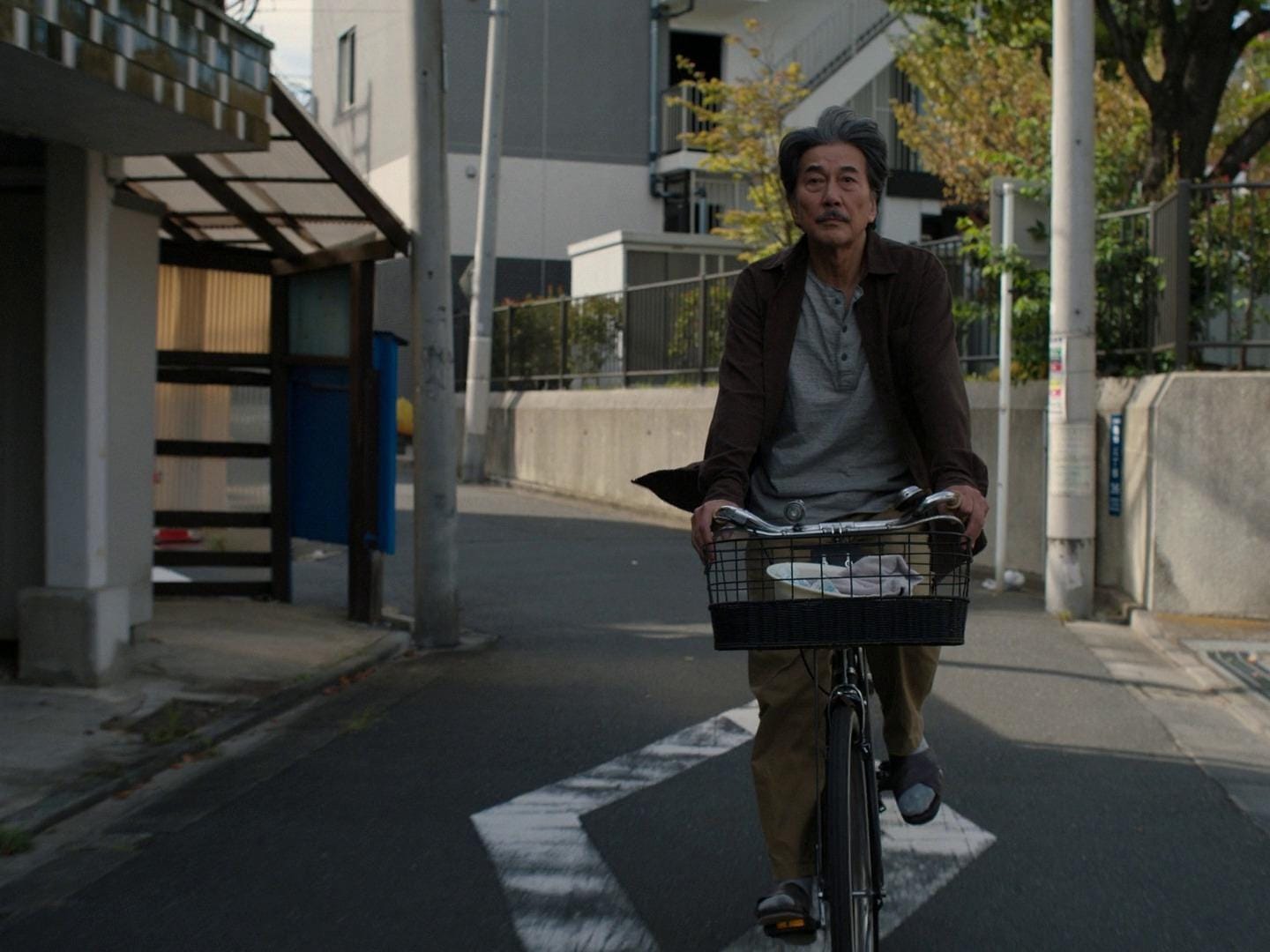
Yes. People reveal the most about themselves when they’re not trying to explain who they are. The smallest habits often tell us more than the stories they tell about themselves. I’ve always liked the small rituals you find in movies, like when Lucky does its yoga session, light up a cigarette and look at his cactus before beginning his day. When Hirayama buys his coffee from the vending machine (I need one of those.)
It’s quite comforting watching someone repeat the same action every morning. It makes mornings feel a bit easier I think.
—
I love cigarettes. They often appears just after a conversation or before someone walks into a room. It gives a character a few minutes alone with their thoughts.
In movies the cigarette has often become this way of showing what someone cant say. It gives someone something to do while they’re waiting, hesitating, avoiding a question, or trying to be alone.
Someone smoking at a party feels different from someone smoking outside after everyone else has gone home. Someone lighting a cigarette before entering somewhere is different from someone lighting up because they need a moment alone.
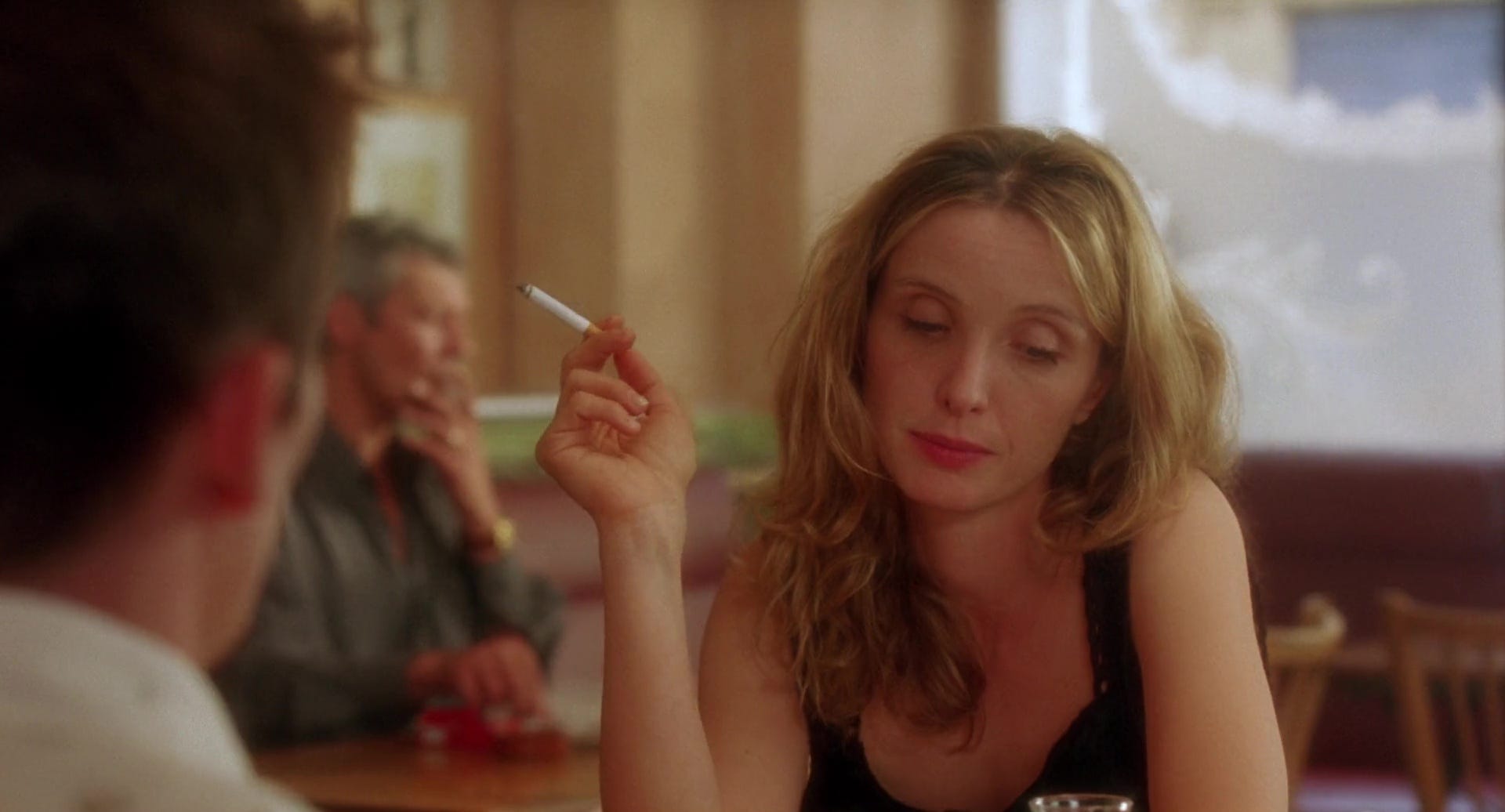
In Before Sunset, in the café scene, the cigarette becomes the atmosphere, the rhythm between Jesse and Céline. They are two people with years of memories into one afternoon together. They’re not only talking about what happened between them. They are trying to understand the distance between who they were and who they became.
Some of the most memorable moments happen around their words rather than inside them: the hesitation before answering, the glance away when a memory appears, the silence where both people understand something but cant quite say it.
Cigarettes fill the small gaps when neither of them knows what to say. Coffee though, works a bit differently. While a cigarette can often gives someone a reason to leave, a coffee gives someone a reason to stay.
This is why i think cafés are so often in movies. They sit in that space between public and private life. One table, two chairs, cups between them.
They allow people to meet without the closeness of inviting someone into their home.
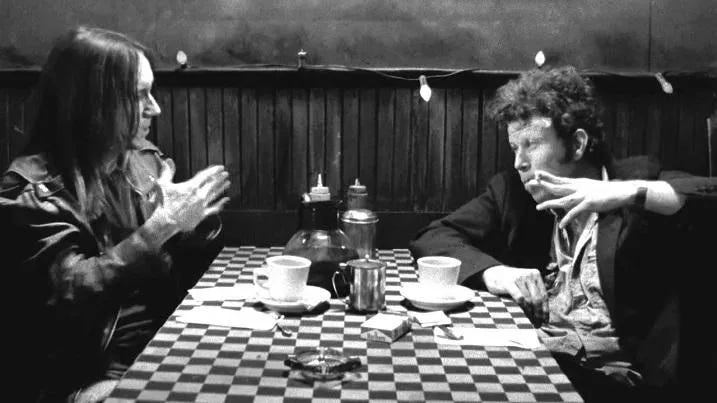
Sharing a moment around coffees give two people a reason to remain together a little longer. It allows to pause before someone answers. It allows a conversation to continue a bit longer than expected, and the feeling that nobody is ready to leave yet.
In Coffee and Cigarettes, Jarmush builds an entire film out of people sitting together, talking, drinking a cup & smoking. The conversations never lead to dramatic places. People might misunderstand each other. They spend time together. The film gives time to moments most stories would skip.
—
Coffees and cigarettes are only a tiny part of what is the language of cinema. They’re not really the point. They just happen to be some of the ordinary things filmmakers return to again and again.
Films pay attention to rooms, windows, hallways. They pay attention of the distance between two people sitting at the same table. They pay attention to the coat someone never takes off. To the empty chair nobody sits in.
None of these details tell the whole story on their own, but really, cinema language is a choreography. It’s the togetherness of it all that begins to tell a story. That begin to tell the poetry between the lines.
—
Films have their own language. They can speak through spaces, and they can speak through a cigarette, a light, or a distance. They speak through everything placed in front of the camera.
Once you start noticing these things in films, it’s hard to stop seeing them elsewhere. You’ll pay attention to a morning light falling through the blinds. To a coffee cup left on a table, or a chair not quite where it should be.
That’s another reason why I have a thing for films. They remind me we’re constantly revealing ourselves without meaning to. Through the objects we keep. The spaces we live in. The little details most people walk past.
A room can tell you as much about someone as a conversation.
