
How Interstellar Turns Physics Into Emotion
How cinematic language makes time and space feel deeply human
On paper, Interstellar is a film about space travel, black holes, the survival of humanity. Emotionally, it’s about something much smaller and personal: the bond between a father and his child, stretched and tested by time itself.
What gives the film its weight is not the scale of its ideas, but the way its cinematic language translates time and distance into felt experience.
The World: Small humans, vast spaces

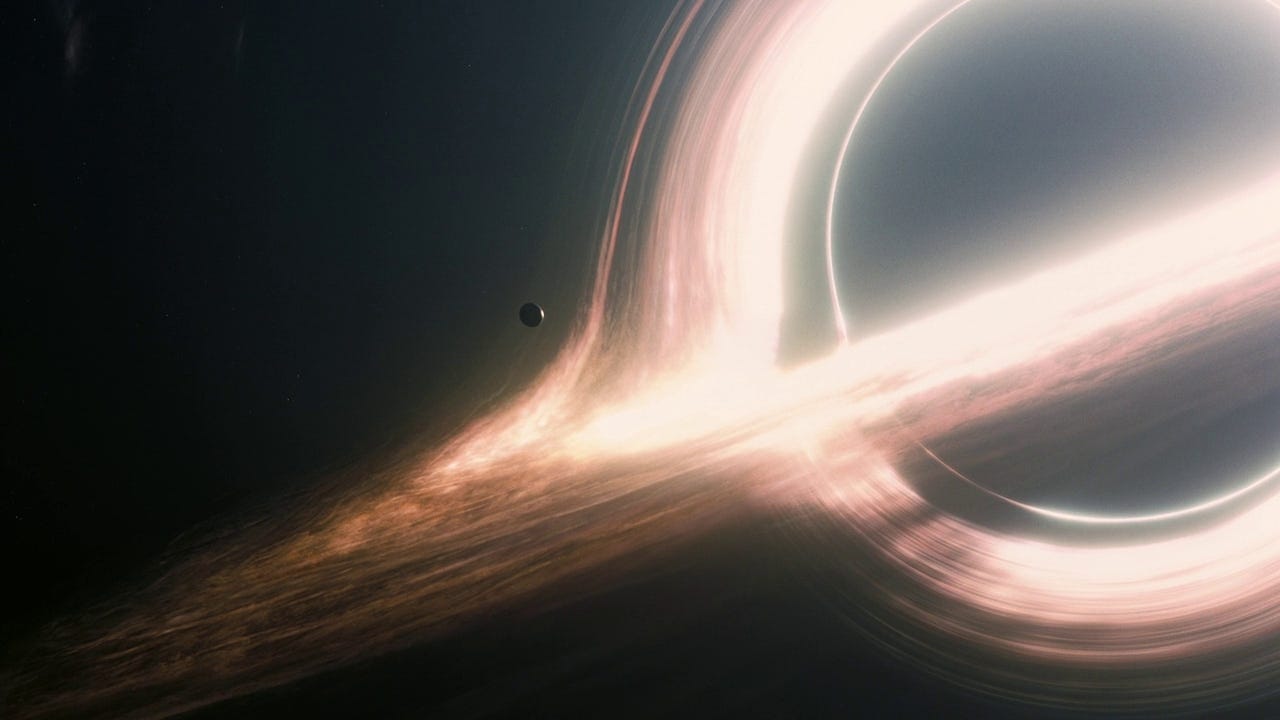
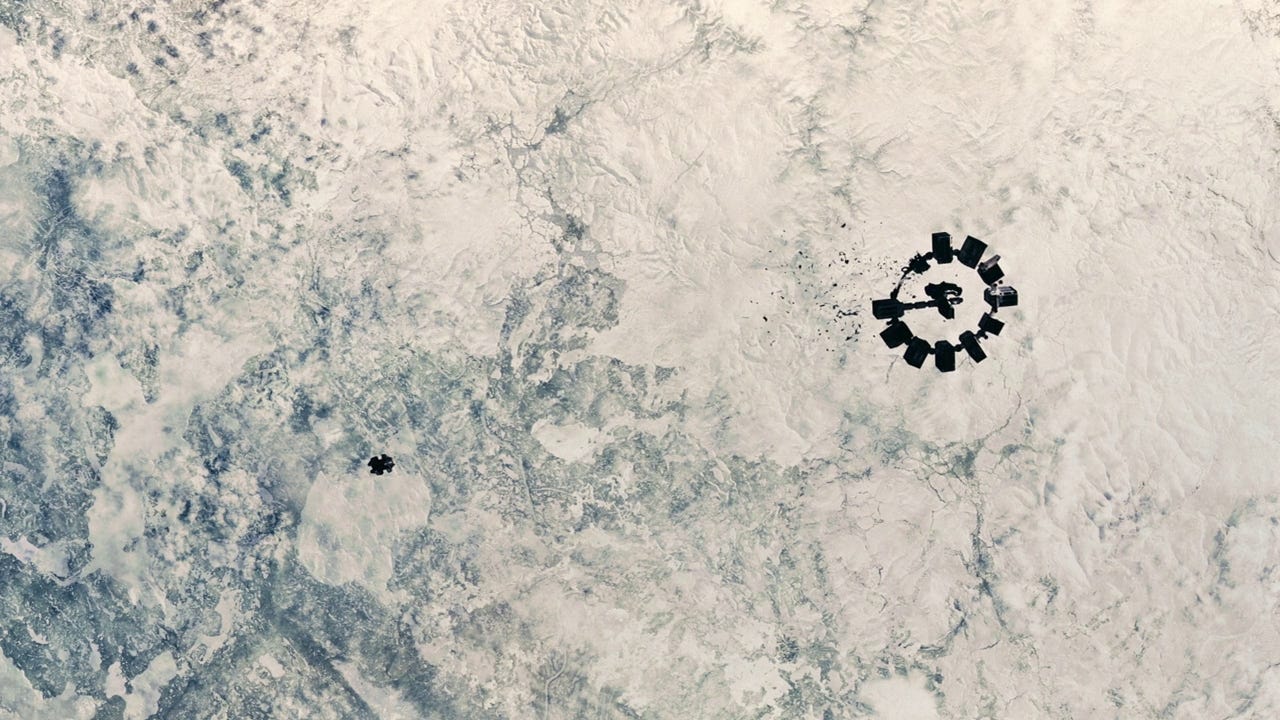
The world of Interstellar constantly contrasts scale. Endless fields of dust on earth. Tiny spacecraft drifting is massive blackness. Frozen cloud, oceans on alien planets, endless horizons.
Humans look tiny against it all.
The universe feels overwhelming. Maybe even indifferent.
Which makes the connection between people feel… not bigger, exactly, but more fragile. More necessary.
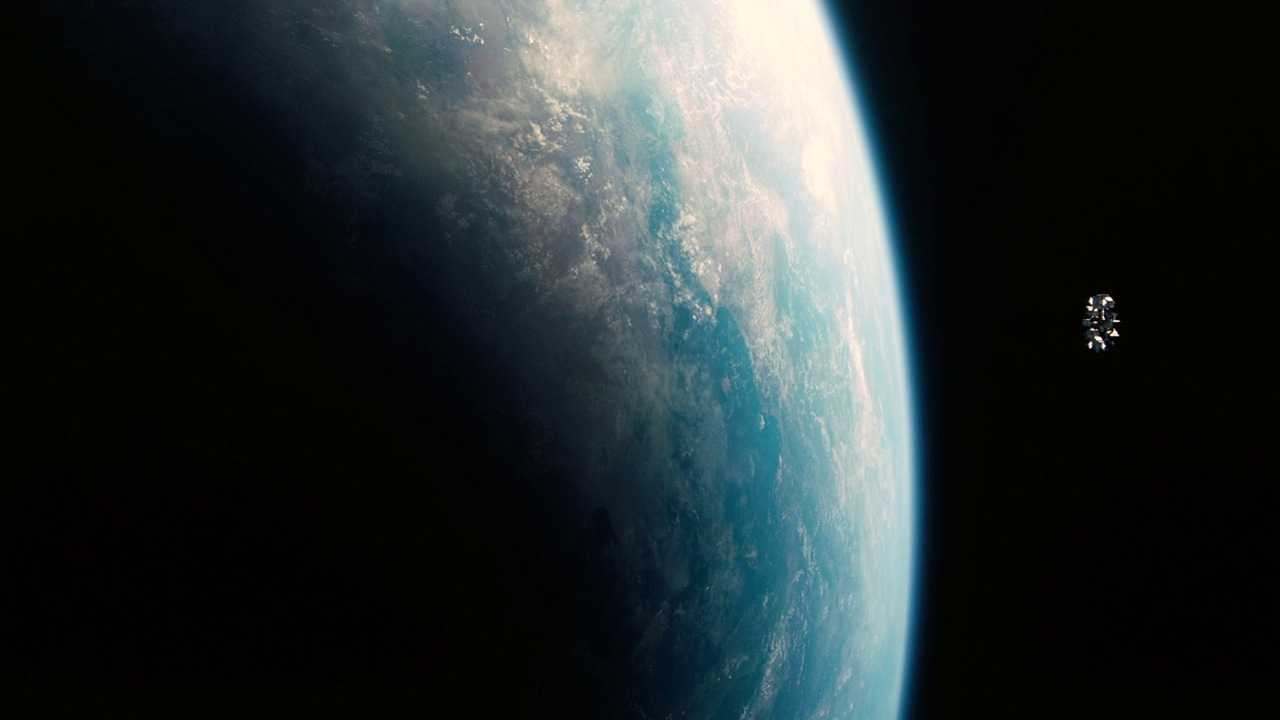
The Camera: Intimacy inside immensity
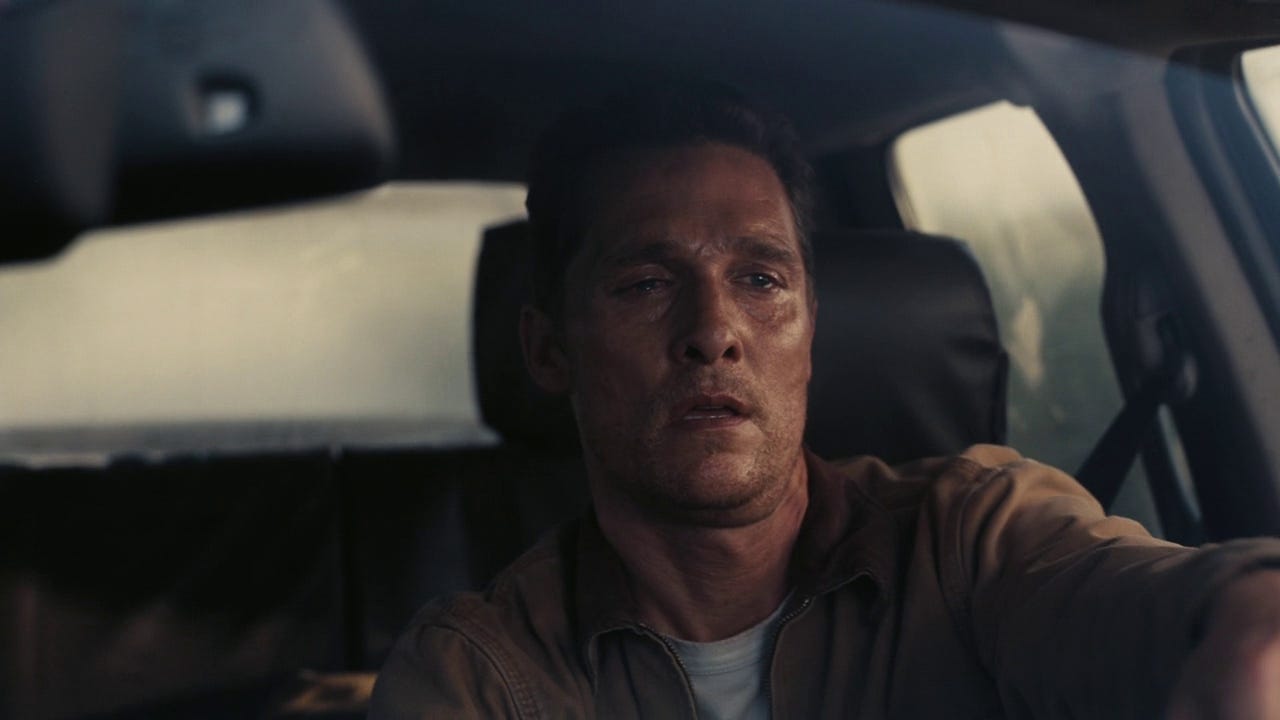
Even amid giant space landscapes, the camera keeps slipping back to close-ups inside helmets, cockpits, inside a car, or a room. We see tears floating in zero gravity. We see faces lit by screens, by distant stars.
The scale never fully takes over.
No matter how vast the setting becomes, the frame keeps finding something human tucked inside it.
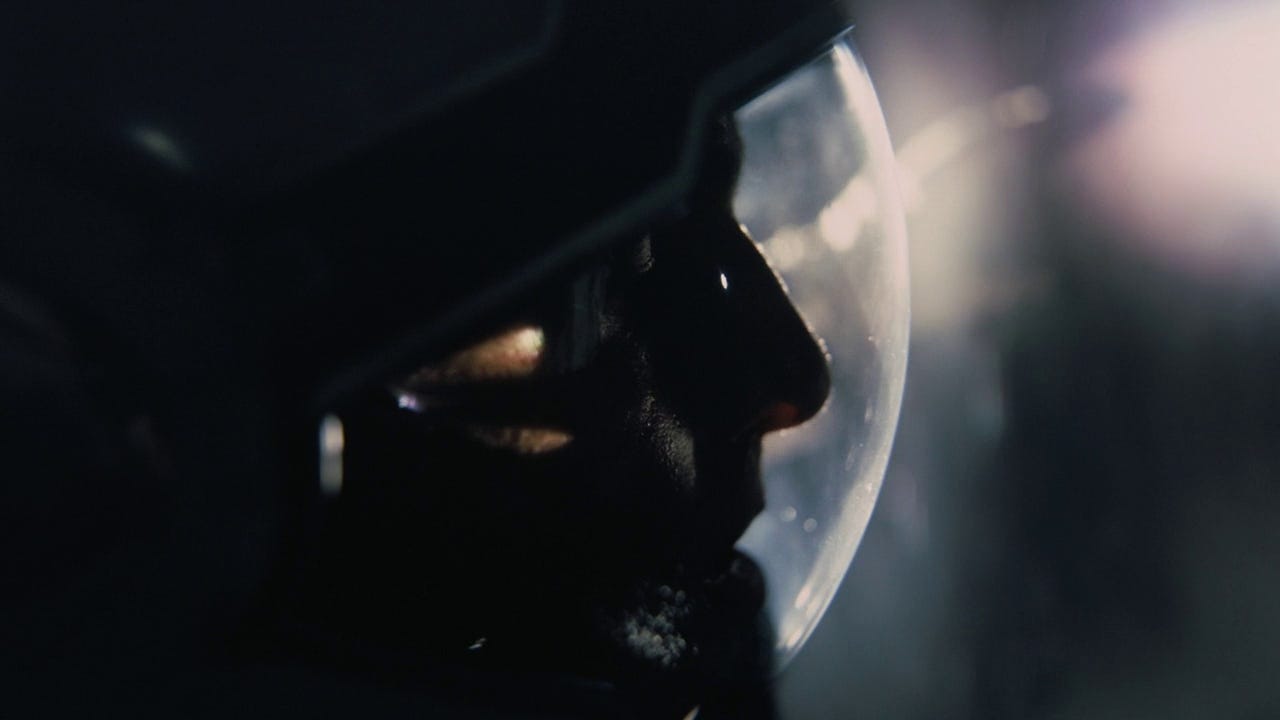
Editing: Time as emotional weight
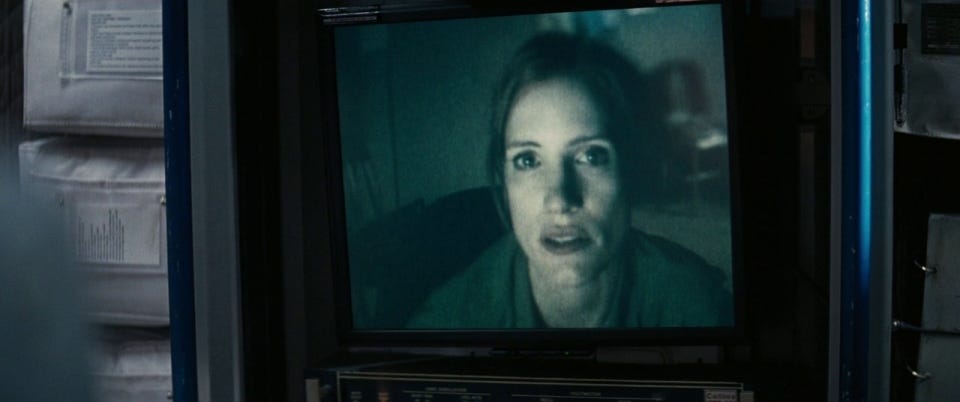
Time drives everything in Interstellar.
The film cuts between timelines: earth and space, father and daughter, past and future. For some, time stretches. For others, it collapses.
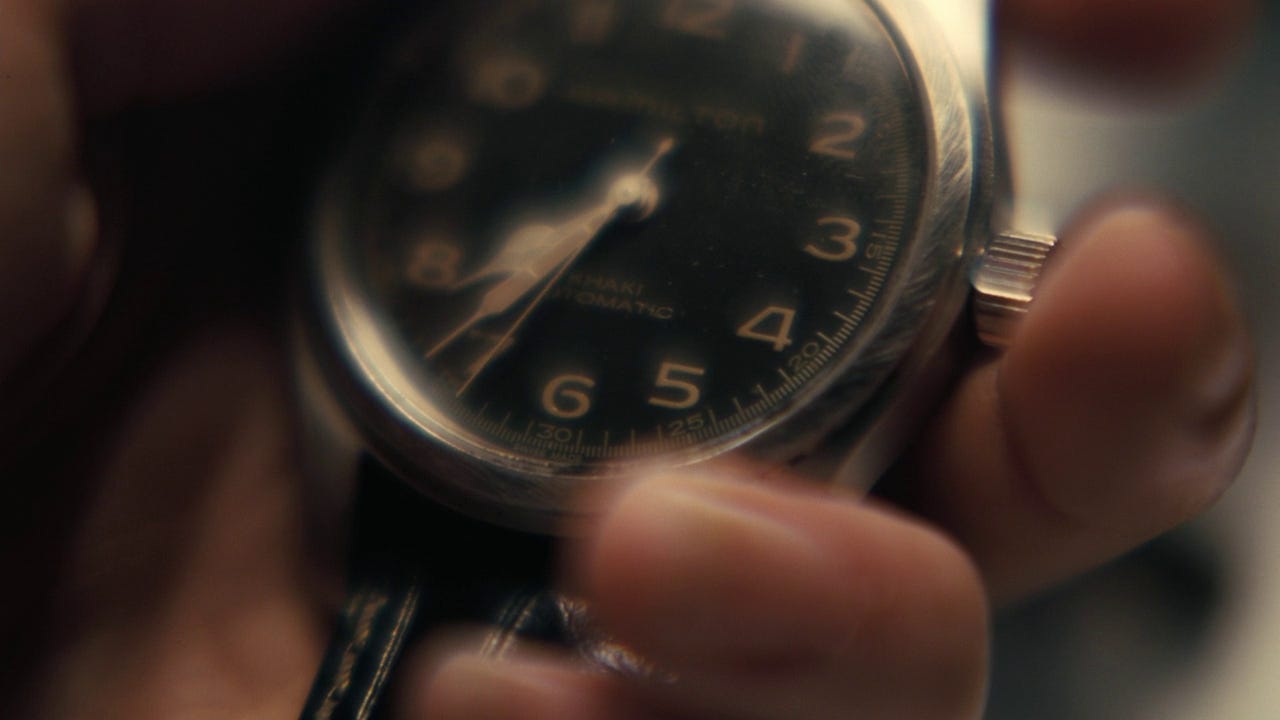
Cooper sits and watches decades of messages from his children.
One after another.
Time piles up. It stings.
Editing turns physics into something emotional.
Sound: The weight of silence and music
Space is silent and the film leans into that. Explosions are muted. Movement outside the ship feels distant. Uncertain.
The silence isolates. It stretches the scenes apart.
Then there’s the music.
Hans Zimmer’s organ score rises and falls like breath, filling the space the silence leaves behind.
The vastness starts to feel… something else.
Not empty. Something heavier.
Performance: Human emotion against the infinite
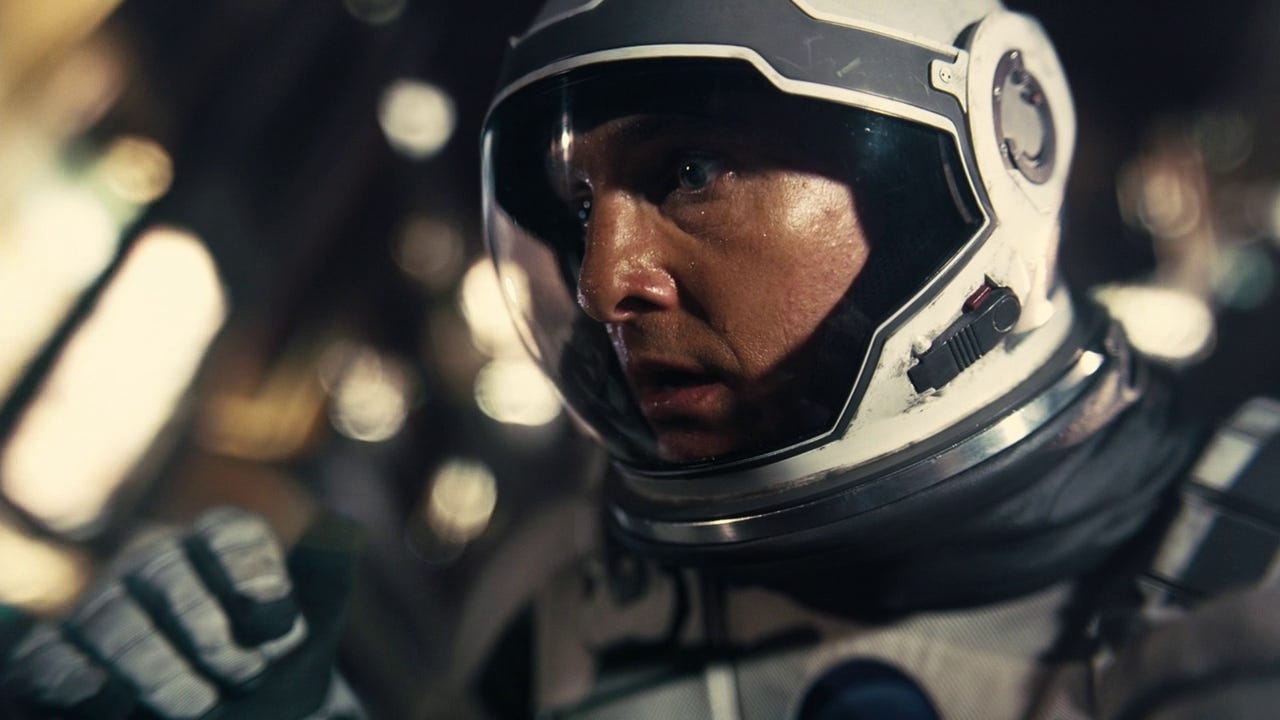
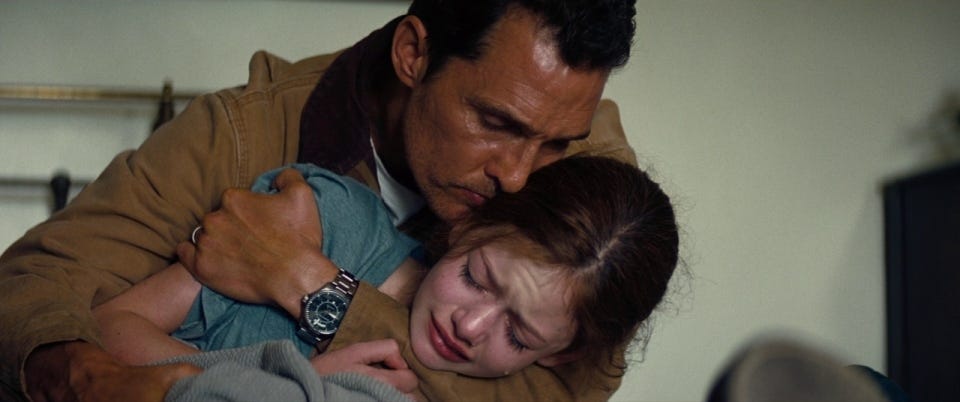
Matthew McConaughey’s Cooper is held together by very little. Especially in the scenes with his children.
Jessica Chastain and Mackenzie Foy carry the other side. Time does things to them. It Changes them, or sometimes doesn’t.
Shoutout to Chalamet, Matt Damon, Casey Affleck. Solid work all around.
No matter how large the story gets, performances keep it human.
When all five pillars of cinematic language work together
The vast environments make humans feel small.
The camera keeps returning to intimate faces.
The editing makes time hurt.
The sound turns silence into weight.
The performances remind us what’s at stake.
Together, these elements make Interstellar more than a sci-fi. They turn space into a stage for love & loss.
The film shows us the universe, how it makes us feel so small and yet, how bloody powerful human connection can be.
That is cinematic language, on a cosmic scale.
Try this while watching
Next time you are watching Interstellar, notice:
How often people are framed as tiny within huge spaces.
How quickly the film cuts between different points in time.
Notice how silence in space contrasts with the emotional score.
How much of the emotional weight comes from close-ups of faces.
That’s cinema speaking big — and hitting properly deep.
Watched it with my ex (it was his favorite film of all time), and ever since, I’ve wanted to write something about time. I just can’t do it yet. It’s the most complicated, basic thing in life. Maybe someday I‘ll be able to write about it in a way that touches people, even if it’s just a fraction of how this film did.
Really like what you’ve got going on here. Your ability to turn such an intricate film like Interstellar into such a concise model for viewing honestly blows my mind. I’m taking notes📝