
Dance as human expression.
What does dance reveal about being human that other forms of expression don't?
Initially I wanted to talk about how dance expresses emotions words cannot. The idea is true, but it’s also the first thing anybody would say. So I tried to think deeper.
What then interested me is that when people dance, they become harder to lie about.
I’m not talking about authenticity. It has nothing to do with being more “authentic.” It’s a word i’m trying to be careful with. People can perform through dance too. They can seduce, imitate, exaggerate, hide, manipulate, but the body gives us information dialogue cannot. How much space someone takes. Whether they care about looking stupid. Whether they need somebody to watch. Whether they’re trying to disappear into a crowd. Whether they need control. Whether they’re finally losing it.
So yeah, I’m feeling that this distinction is richer than “dance = freedom”
Take Beau Travail. Galloup’s final dance is obviously tempting to call liberation but i dont think we should settle there. This man has spent the entire film controlling himself, controlling other bodies, living inside rules and repetition. Then all of the sudden his body is ridiculous, beautiful, aggressive, loose. Is that freedom? Fantasy? Something he could never allow himself to be? The interesting part is that I’m not sure.
—
Then Another Round. Martin’s dance feels alive as hell, but the circumstances are awful. His friend has died. His marriage has nearly collapsed. He has spent the film trying to artificially recover a version of himself he thought he had lost. Then his body remembers something. That’s much more interesting than “he’s happy again”. Maybe the body can remember a person that the mind has given up on.
And then Aftersun fucks with that idea completely. Dance does not bring Sophie closer to her father. It almost demonstrates how impossible it is to reach him. There’s movement, music, bodies, memory, but she still cant completely know what was happening inside him. So dance isn’t revealing everything, but it reveals something while keeping the person mysterious.
—
Shame (not the film) is another thread I’d like to investigate hard.
Because now I’m thinking that a huge amount of dancing is basically negotiating the question of “Can I let people see me like this?”
That gives Billy Elliot much more texture than simply “dance lets Billy be himself”. His body knows something about him before the world around him is willing to accept it. But being watched also matters a lot. At different moments, dancing makes him vulnerable, judged, impressive, incomprehensible.
Poor Things is fascinating from the opposite direction because Bella barely possess the social shame everyone else has learned. Her dancing looks strange because she has not learned the correct amount of embarrassment yet. Everyone around her has.
That’s leading me to somewhere interesting about dancing… Maybe becoming an adult partly means learning to police your own body.
What do you think?
—
Truth is, I thought about this topic just as an excuse to finally talk about Titanic. AND ROSE!
Her, Rose, entering that third-class party isn’t just Rich Girl Discovers Fun™ — that would be proper fun, but we’re a serious publication.
Rose’s entire life is organised around stuff like how she should sit, dress, eat, speak, marry. Then she drinks beer and dances until she’s sweating. Her body enters a class she supposedly does not belong to before her life does. There’s something about social identity there. You can behave your way temporarily outside the person everyone has decided you are.
And Call Me by Your Name gives us almost the inverse: Sometimes the important person isn’t dancing. It’s the person watching.
Ha! How ‘bout that for a plot twist.
Elio watching Oliver dance is delicious material really, because Oliver looks completely comfortable occupying space. Elio is not. Desire gets mixed up with envy, fascination, intimidation, wanting someone and maybe wanting to be capable of moving through the world the way they do. Watching another person dance can reveal something about you.
Speaking of this, it’s actually a scene I have in mind for the day I’ll be doing my first film.
Anyway — that makes me think of something … We should be asking two questions in every dancing scene:
What happens to the dancer?
and
What happens to the person watching them?
That’s the perfect thought to talk about Ex Machina. I think that the dancing scene becomes much more disturbing through that lens. Nathan and Kyoko’s choreographed dance is funny for about half a second, but Kyoko is also effectively his possession. Caleb watches this bizarre display without knowing how to interpret it. Dance becomes control. Nathan can make another body perform. That completely ruins any comfortable idea we were forming about dance as liberation.
Speaking of control, let’s have a go at Black Swan because it pushes it even further. Nina has spent years making her body extraordinarily disciplined. The tragedy really is that this supposedly expressive art has also become a way of destroying herself. She has almost total control over her body and almost none over her life. That contradiction belongs in this essay I think.
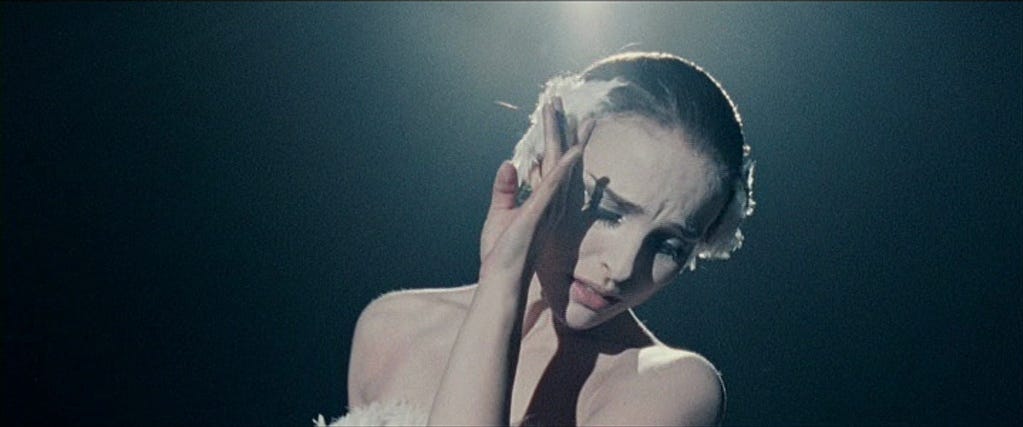
Let’s finish this opening (wait, what?) with Climax, one of my favourites. This film feels like the nuclear version. At first the dancers are incredible because everybody is distinct. Personality comes through movement. Then the same group of bodies becomes uncontrollable. Dance moves from individual expression to collective panic. Sames bodies. Same room. Completely different human situation.
—
Let me add some other films on the table that I think could genuinely compete with this existing list already rather than merely pad a Letterboxd list:
Girlhood (2014) has that hotel-room sequence with the girls dancing and lip-syncing to “Diamonds” . Four girls briefly create a world entirely for themselves. They are watching each other, performing for each other, being stupid, glamorous, young. It’s joy, but it’s temporary joy inside lives that are considerably less free.
Raw (2016) deserves consideration. Justine dancing alone in front of the mirror is interesting because dancer and spectator are the same person. She’s looking at this new version of herself appearing through her body. Sexuality, appetite, disgusts, excitement, identity, all tangled together. That scene feels very compatible with everything I talked about.
Fish Tank (2009) Mia’s relationship with dance is messy. It’s private expression, ambition, identity, and then it also becomes something other people watch and potentially exploit. It destroys any easy separation between “dancing for yourself” and “performing for somebody”
I recommend you to watch this one!
Lovers Rock (2020) gives us something my current group of films does not have enough of: collective dance as social language. Yep. A whole room communicating through bodies, music, proximity, flirting, belonging. Nobody needs to stop the film and explain the relationships. You can see them being negotiated physically.
Ema (2019) could be a good example to dance as power. Not freedom in some vague inspirational sense. POWER. SEXUALITY, CONTROL. Self- invention, manipulation, group identity. The body as something a person actively uses.
Also, I have to say that I’m weirdly interested in A Bigger Splash (2015). Ralph Fiennes dancing around to the Rolling Stones is almost aggressively uncool. I know it sounds mean but that’s precisely why I like it. He wants attention. He wants to demonstrate that he’s still alive, desirable, funny, impossible to ignore. People often look ridiculous when they dance, and we need that kind of dancing in this essay! We should not make dancing sacred.
Actually, that last point is important.
Dancing is one of the few things adults willingly do that can make them look completely stupid.
That connects Poor Things, Another Round, A Bigger Splash, maybe even Billy Elliot. There’s vulnerability in moving without knowing how your body looks from outside. Children do this easily, but adults usually learn self-consciousness. Alcohol helps. Darkness helps. Clubs help. Being alone helps. Being around people you trust helps.
I love dancing. Do you?
But why? It’s something I’ve been doing since forever. Early with my mum (to connect), and then alone (as a new way to express myself.) Then later in parties, and clubs (to show off my skills). I remember having my first erection while dancing. That’s how much power dancing had over my body.
Nowadays it’s something I do alone, mostly during my morning workout. Sober. I like to do improv’ and let my body feels the rhythm. If you can’t tell already, this whole piece is also a big improvisation. Going with the flow. No plan. No outline.
Do you like to dance too? If yes, what disappears when you dance? Do you stop monitoring yourself? Do you enjoy being watched? Do you forget people are watching? Do you become louder physically than you are verbally?
I’d be interested in knowing these little observations! They matter more than some manufactured childhood trauma involving a disco ball.
What else?
Okay, I’m trying to think of some other scenes I’d like to talk about…
There’s that scene, but I’m a bit suspicious of it. It’s in Jojo Rabbit. The final dance is lovely but the film more or less hands us the interpretation because Rosie has already connected dancing and freedom. It may be too perfect for this essay. The scene does not give that much resistance.
Okay, let’s talk about the elephant in the room. La La Land.
Beautiful dancing, obviously. But I need to ask you whether you think it really teaches us something about people that our stranger examples don’t? “Two people flirt through dance” might be true but not worthy of a full paragraph from me. What did you say? I don’t have a heart? Bleh.
I know you all are big fans of the Joker, so let’s talk about The Joker!
I think a dancing scene analysis could be very useful or painfully obvious depending on what I do with it. “Arthur dances because he transforms into Joker” is Wikipedia-level analysis. More interesting would be that he repeatedly seems to need movement at moments where his identity is changing. Like for example the bathroom scene where he dances after the killings. Nobody is watching, and it feels like his body is processing what his mind cannot yet organise. So there’s a deeper territory to explore maybe.
Let’s go deeper
So, right now, I see a possible deeper territory emerging.
Dance exposes our relationship with control.
It can be control over our bodies.
It could be control over how other people see us.
Control over who we think we are?
And also, what happens when that control loosens.
Yes. I like this theme. It could contain joy without making the essay about joy. It could contain freedom without declaring dance inherently liberating (boring). It gives us Billy and Nina, Galloup and Martin, Bella and Mia, Oliver and Elio, Nathan and Kyoko, Sophie and her father.
Crucially, it allows dance to be beautiful, stupid, frightening, sexual, awkward, cruel, and joyous in the same essay.
Control / The loss of control / Being seen → that’s our thesis. Let’s put a big circle around on the wall. That has blood on it.
Is dancing actually a form of truth?
(The actual essay)
YES.
That’s the obvious answer. And that would be the dream; You stop talking, start to loosen up, and the “real person” appears.
But our films keep fucking that up.
Okay — Nevermind, let’s scrap this.
WHAT WE GIVE AWAY WHEN WE DANCE.
(The actual essay?)
I love dancing. I don’t have some big story attached to it. No night that changed my life, no dead relative who taught me salsa, nothing useful for the opening of a serious personal essay. I just like it. I like what happens after a few minutes, when i stop wondering what I look like.
Most of the day we’re managing ourselves. How we sit. Where we put our hands. Whether we are talking too much. Whether someone is looking at us. Whether we look confident, bored, attractive, stupid. Dancing can shut some of that down. For a few minutes you stop being the person watching yourself being a person.
That’s probably why dance scenes in films get to me so easily. They often come when talking has stopped being useful.
At the end of Another Round, Martin dances. By then we know he used to be pretty good at it. We also know the version of him we have spent most of the film with: tired, disconnected, a little absent from his own life. He and his friends have spent months trying to manufacture feeling through alcohol, as if being slightly drunk might bring back the men they remember being. Well, it works, and it does not. People get hurt. One of them dies, and nothing gets tied up nicely.
Then Martin moves.
What I love about the scene is that the film does not give him a better life because he can dance again. His friend is still dead and his marriage is still damaged. He has not discovered the secret to being 40-something. But something in his body wakes up.
Okay maybe “wakes up” is too easy. I dont even know if he had lost it. That might be the more interesting thing. Perhaps all those years the dancer was still there, under the teacher, husband, father, tired man sitting at a dinner table. We talk about becoming different people as we get older, but maybe some of those old people never actually leave, and the body remembers them.
—
Beau Travail ends with another man dancing, and the feeling is completely different.
Galoup has spent the entire film controlling himself. He belongs to a world of uniforms, drills, rules, repetition, strong men moving exactly when they are supposed to move. Even desire seems to have nowhere safe to go. Everything is contained, then he’s alone in a nightclub.
At first, he barely moves. Then he does and his whole body breaks open.
It’s tempting to call this freedom. I’ve probably called it freedom myself, but the more I watch that scene —
THAT SCENE:
— the more I watch THAT scene, the less sure I am that freedom is enough. We don’t even know exactly where this moment exists in relation to the rest of his life. It can feel like release, fantasy, rage, desperation, a version of himself that had nowhere else to exist.
To me, it’s what makes the scene so powerful. You see, his body gives us more, but somehow I understand him even less.
We often talk about dancing as if the body tells the truth once language gets out of the way. I like that idea. I’m also starting to think it’s bullshit.
A body can lie too. It can perform, or misunderstand itself.
Peter Parker in Spiderman 3 proves this better than most people, unfortunately.
There’s this (famous) sequence in the film where Peter, under the influence of a black suit, walks through New York convinced he has become extremely cool. His hair has changed. His clothes have changed. His posture has definitely changed. You see him point at women, and moves his hips. He looks at himself like the transformation is complete.
Peter thinks he’s showing the world confidence. The world sees Peter Parker doing finger guns.
I love putting this scene next to Beau Travail because it ruins the seriousness, but it also creates a real problem. What do we actually reveal when we move? Peter is expressing something genuine. He genuinely feels different. He feels sexy, he feels like he’s dangerous and powerful. His body is telling the truth about how he sees himself.
It’s just everybody else who disagrees.
And now we’ve got a problem. I can think I’m one person, you can look at me and see another, and guess what? We can both be right. Dance can make that gap enormous.
Sometimes it becomes funny. Sometimes it becomes frightening. Sometimes you barely notice it.
In Burning, Hae-mi dances outside at sunset while Jong-su and Ben watch her. She takes off her top. She raises her arms and she moves slowly. At one point she cries.
It’s one of those scenes that practically begs you to explain it, which is why I don’t want to. What is she feeling? Freedom? Sadness? Loneliness? Is she performing for the men? Has she forgotten they are there? Does she want to be looked at? Does she want to disappear?
I. DON’T. KNOW.
And they don’t know either.
It’s what makes the scene interesting in my opinion. Hae-mi becomes incredibly visible without becoming understandable. We see her body, we see her face, we see her cry. We have all the information and somehow she’s still out of reach.
Being seen is not the same thing as being known, and I think you and I probably confuse those two things all the time.
You do it too. I know I do. Someone walks into a room and within five minutes we’ve already decided things about them. How they dress, how loudly they laugh, who they touch, whether they look at us, whether they dance. We grab all these little things and build a whole person out of them.
Sometimes we are right. Sometimes we build Peter Parker.
True Lies makes this even messier. Helen thinks she is performing a striptease for a stranger. She has been pulled into a ridiculous fake spy operation without knowing that the man behind it is her husband, Harry. She’s nervous. She’s pretending. She changes the way she moves because she believes she has to become another woman for a few minutes.
Meanwhile her husband watches. So who is Helen in that room?
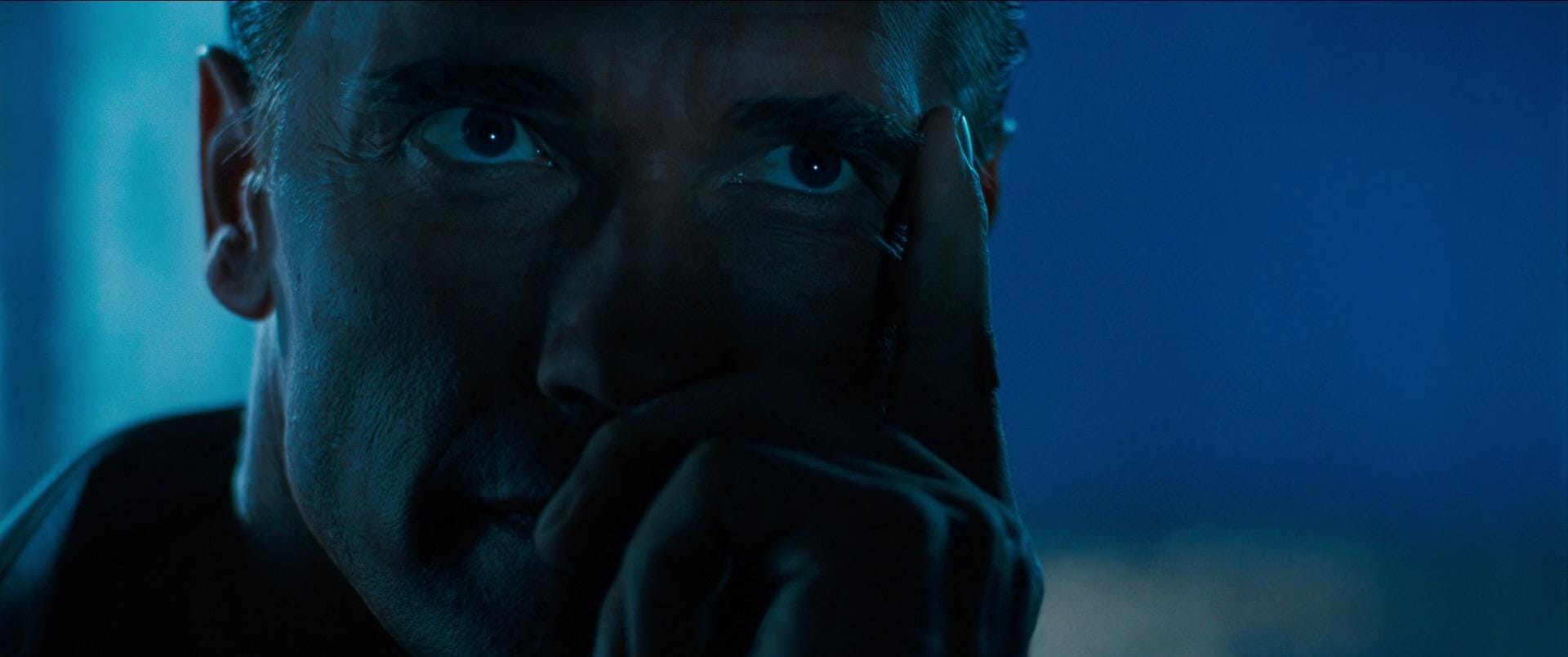
Is she the wife? The performer? The woman pretending to be confident? The woman discovering that she can actually be confident?
Harry has lived with her for years, and he gets to see something he apparently never knew was there because she thinks he isn’t there.
That’s beautifully stupid.
You know how we do this thing where you’re either “being yourself” or you’re acting? I’m starting to think that distinction is a bit shit. Real life works differently. Sometimes pretending gives us permission to do something we wanted to do anyway. Put on a costume, use a fake name, go somewhere nobody knows you, drink two glasses of something, stand under bad club lighting. And now a part of you that “wasn’t you” five minutes ago has very strong opinions.
Because look at Helen. She puts on a mask and Harry sees more of her. Maybe masks don’t always hide us.
That does not mean dancing is automatically some lovely act of self-discovering either.
Look at Mr Blonde dance in Reservoir Dogs while torturing a man tied to a chair.
There’s no liberation here. No misunderstood soul discovering himself through movement. He has control and the other man does not, period. That’s precisely what the dancing tells us. He’s comfy.
Violence usually makes bodies tense. Well. Not for him. Do you ear that? He moves around space casually, enjoying the music, enjoying himself, while another person cannot get away. The dance turns power into something physical. One man gets to move wherever he wants. The other cant move at all.
And now you know something about Mr Blonde you probably didn’t want to know. The truth does not have to be beautiful.
You watch someone dance and maybe what comes out isn’t beautiful at all. Maybe they’re vain. Maybe they’re needy or cruel. Maybe they fucking love having power over somebody. We tend to make the body sacred when we talk about dance because movement can look beautiful. Truth is, humans remain humans while doing it. Unfortunately.
And then there’s the opposite problem, right? What happens when control disappears completely?
Midsommar and Climax are almost evil twins in that regard.
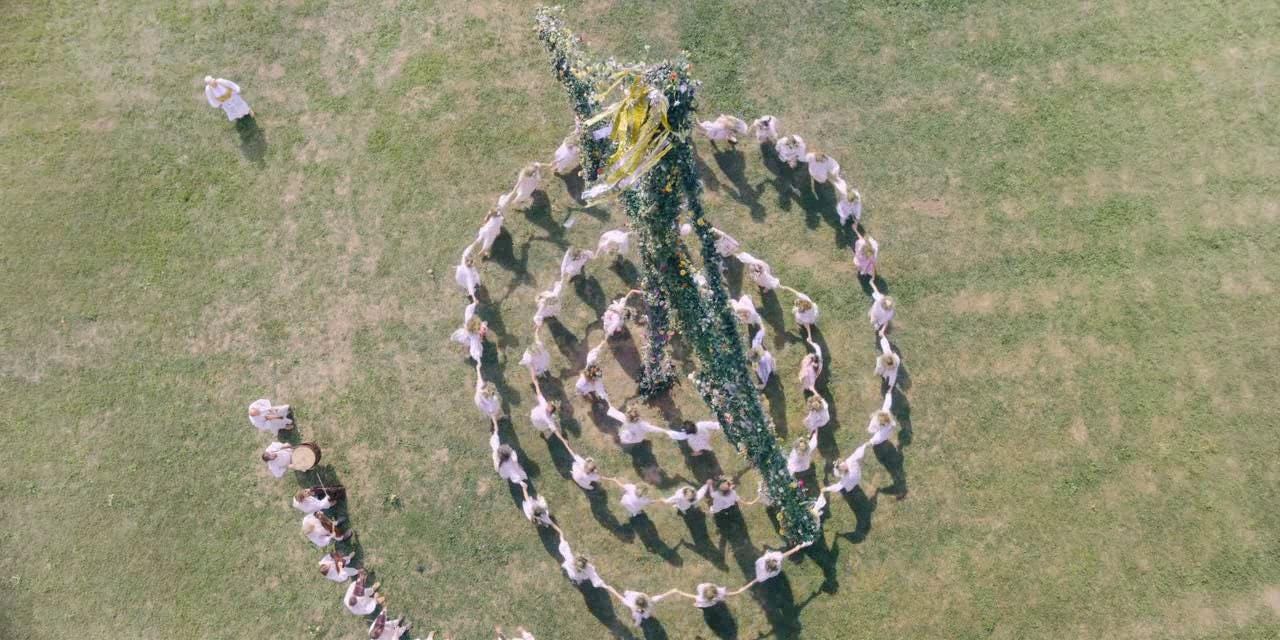
Both films put groups of people together. Both use dance, intoxication and repetition, and this is where things get weird for me, because in both films you start watching individual people disappear into something bigger.
In Midsommar, Dani joins the May Queen Dance. She’s already emotionally wrecked long before she starts spinning. The women around her move with her, laugh with her, speak to her. The borders between Dani and the group begin to blur.
That should be frightening but it also looks like relief.
For most of the film Dani has been alone next to other people. She apologises for having feelings. She worries about being too much. She cries privately. Her relationship is basically an exercice in making herself smaller so everybody won’t leave.
Then she enters a group where everyone moves together. Later, when she cries, they cry.
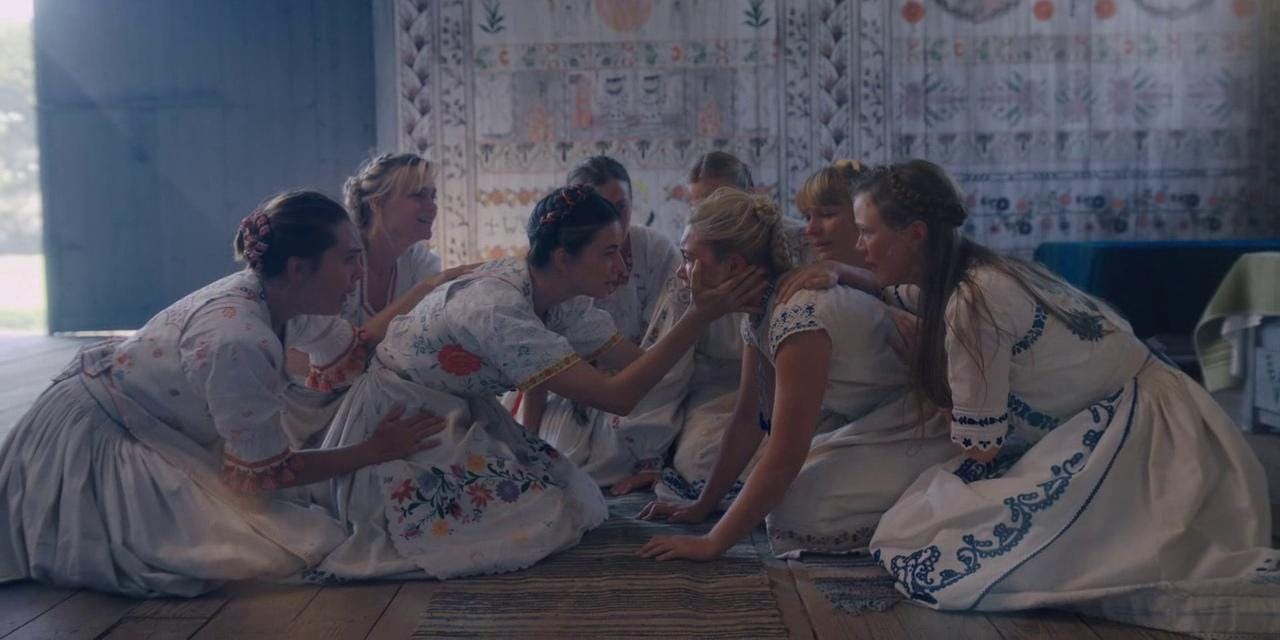
There’s something deeply comforting about that, which is exactly what makes the film so nasty. And fuck, can you blame her? If being Dani has felt that lonely, maybe disappearing into everybody else feels pretty good.
Climax takes almost the same ingredients and removes the comfort. At the beginning, the dancers move together while remaining completely individual. You see personality everywhere. Confidence, sexuality, humour, aggression, style.
Then everything goes wrong. Control disappears, but freedom does not arrive.
Fear does, suspicion does, violence does. The group stops feeling like a group and becomes a room full of people trapped inside their own bodies.
So now even my whole control vs. freedom thing is starting to annoy me. We need a bit of control before letting go can even feel good. Anyone who has ever danced badly at a wedding probably understand this better than a philosopher. You loosen up because the place feels safe, because your friends are there, because everyone else looks stupid too. Take that safety away and losing control becomes something else entirely.
There’s another dance I keep thinking about and it’s in Happy Together. Yeah, different vibe. Lai and Ho have one of those relationships where loving each other and being good for each other are clearly not the same thing. They hurt each other. Leave. Return. Try again. Fail, once again.
And yet, and yet! They can dance together. And you watch them and think, for fuck’s sake, these two are actually better at dancing together than they are at being together. Timing, attention, adjustment. One person moves and the other person responds. It does not save them.
I love this film so much and this scene:
Movies often make us believe that if two people can dance beautifully together, they belong together forever. Happy Together gives us something much more relatable. Maybe you know someone like that. You fit perfectly in one little corner of each other’s lives and absolutely nowhere else. You can know exactly how someone moves through things and still have no idea how to build a life with them.
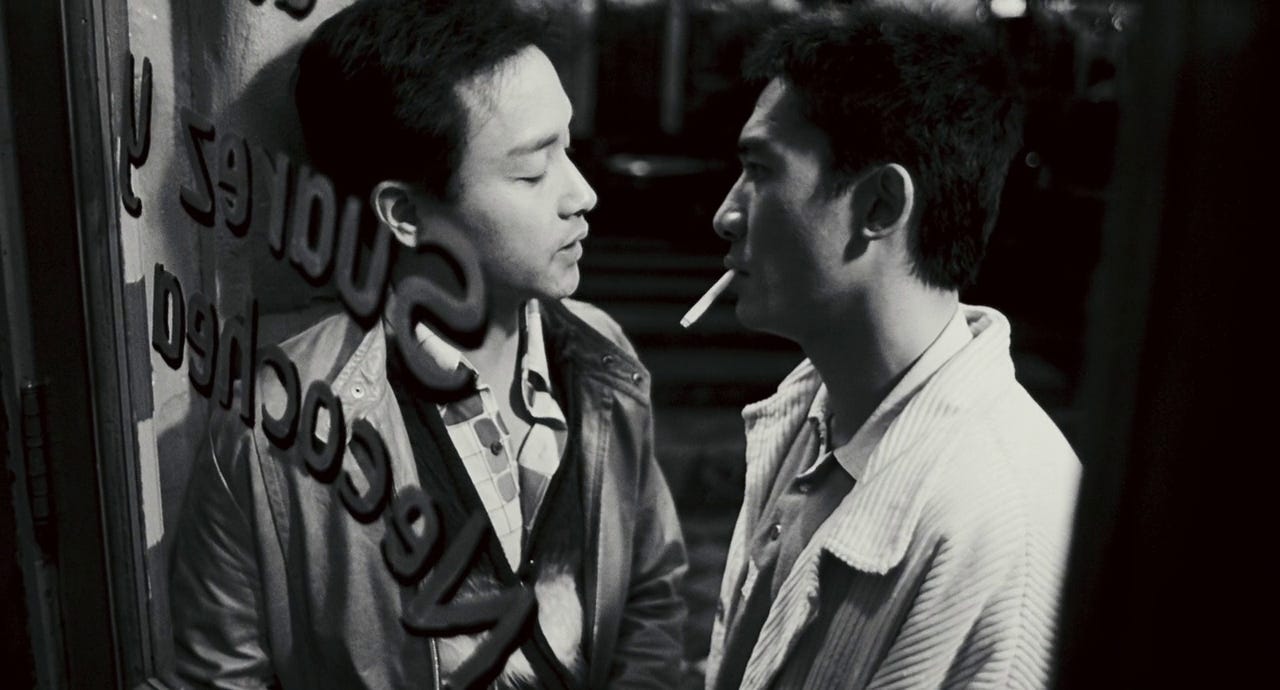
So what the hell do we do with that? Their bodies tell us something. Clearly not enough. And that’s probably how I end up back at Aftersun.
And you know what Sophie is doing for basically the whole of Aftersun? The same thing we’ve been doing here. Watching someone and trying to work them out. She has images. Holidays. Conversations, and silences. Small behaviours. A camera. Fragments.
Well; also dancing.
Movement becomes tied to the version of Calum she remembers and the version she can never completely reach.
That hurts because we have spent the whole film watching him closely too. And we notice things. We notice when his face changes, when he disappears into himself, when he tries to be fun. When he cannot quite stay inside the moment. We keep thinking that if we pay attention, maybe we will finally understand him.
Sophie does the same thing, but another person is not a puzzle that becomes simple because you stare at all the pieces. That might be what i love about people dancing in films.
Not that dancing reveals who someone really is. I don’t think there’s a clean “really is” hiding underneath everything else.
So where does that leave us? I don’t know, don’t ask me. All I know is that you can dance because you’re happy and because you’re scared. You can perform and still show me something real. You can lose control and still, somehow, feel safer. Everybody in the room can be looking at you and nobody really knows what the hell is going on inside you. You can dance perfectly with someone you cannot live with. You can think you look incredible while an entire street watches you do finger guns.
The body gives things away.
Just never everything.
—
Raphaël, The Long Take.
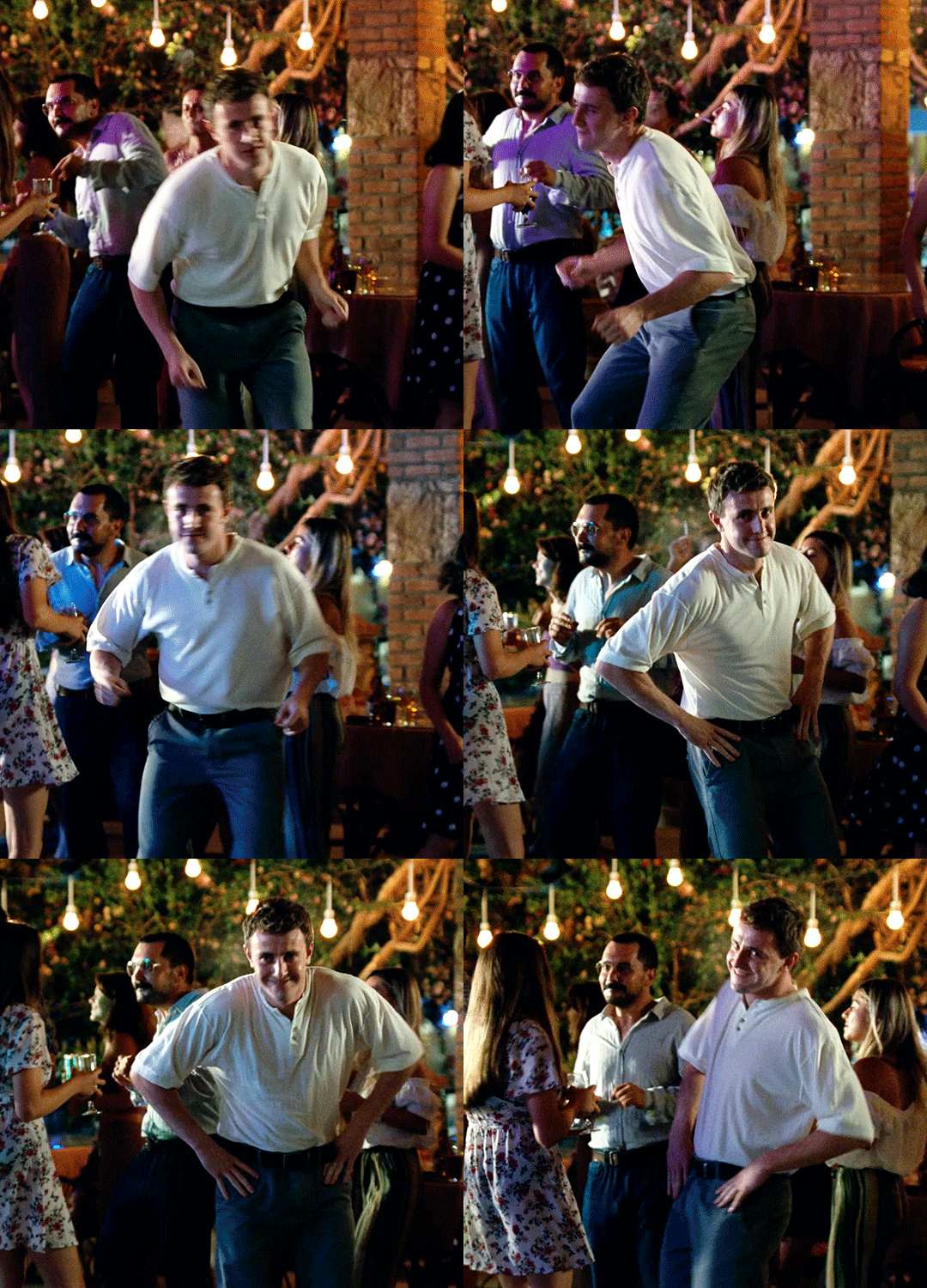
Hi Rafa ! I had such a lovely afternoon reading this and sipping my coffee wand watching the dance clips even though I don't know most of these movies. so thanks a million! I note down a lot of questions you wrote so I can write my answers and reflections in my journal.
I LOOOOOOOOOOOOOOOOOOOOOOOOVE DANCING!
I was dancing since I was a kid, it surprises me how the body can move in a different direction, like omg? My soul embodies this? and with a thought I can move in a lot of directions I never thought it's possible? it fascinates me every single time!
I became in the moment when I dance, I no longer think of anything, I do enjoy being watched (but not to be in the spotlight), and i like to take up space and dance with a flamboyant flair around me. But also I love dancing alone in my room Infront of a mirror. I love dancing with someone or in a group and spread the joy! .. and to answer your question: I do dance loudly that I get people asking me if am having cocaine or selling one XD, and I am totally sober!
Reading this reminded me of mom's auntie, she is in her late 70s, she is very sick and she is thinner than a skeleton and everyone expecting her to die soon, recently, at my cousin's wedding, she didn't care and danced with full force, and she fell on the ground in the middle of the wedding! we were so scared! they gave her pills, two minutes later, she continued dancing?!! they forced her to sit so she doesn't die, but she ignores them every time and tells me: Zozoooo habbibiiii and shakes her shoulder right and left, right and left and throwing her hands up in the air XD, Like even if am dying! I will dance! Told my mom: your auntie is my role model!
I dance a lot, mostly alone in my house, sometimes outside with other people - sometimes I feel the desire to be really seen through my dances, but other times I feel like I want to keep it all to myself.. It’s actually my first day on substack and I’m so happy to have found this writing today. I loved all the movies you’ve referenced (especially happy together one of my fav movies) and will be looking forward to other articles!!